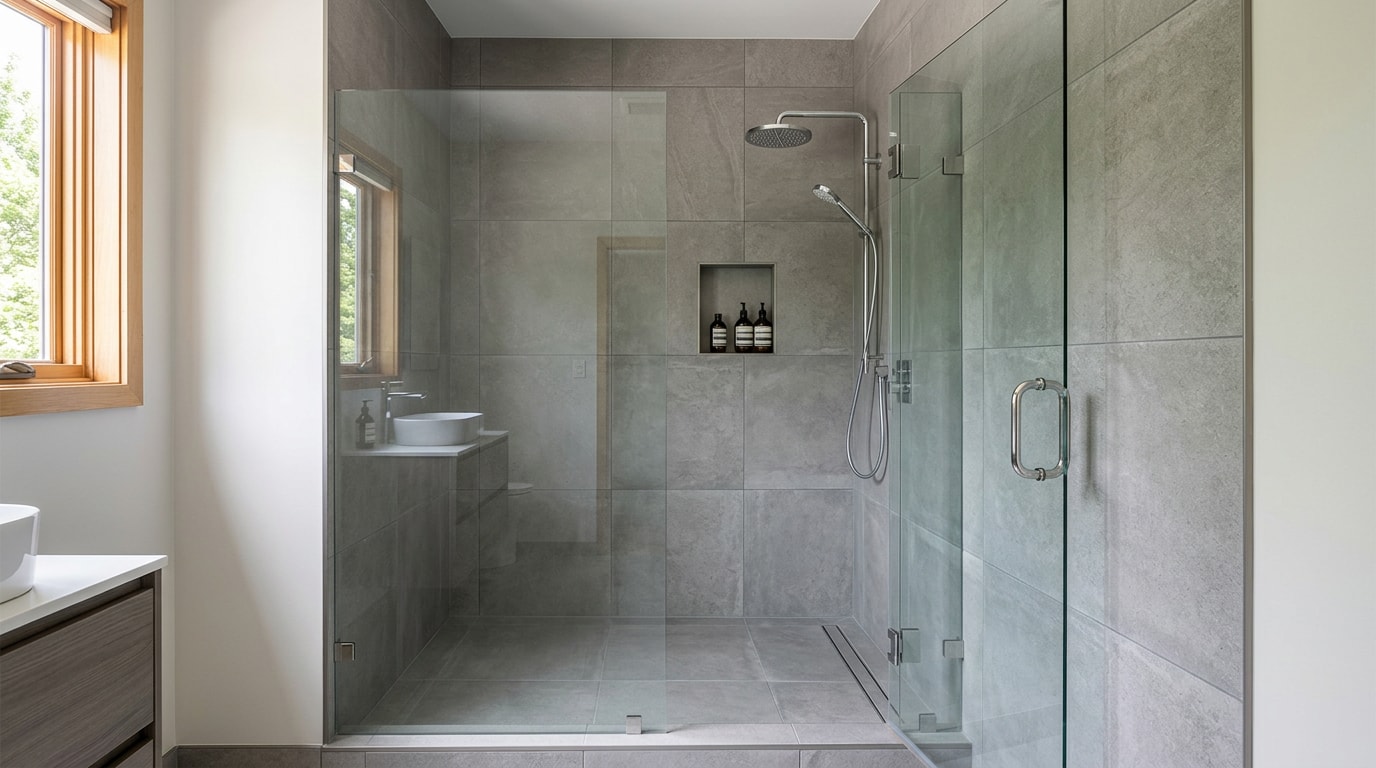
Yes, you can tile over tile in a shower in Frisco, TX, but only if the existing layer is fully bonded, flat, and free of moisture damage, cracks, or mold. Those conditions are rarer than most homeowners assume once someone actually inspects the surface underneath. Before you grab a trowel or call a crew, here's what separates the rare shower where this works from the much longer list where it doesn't.
Quick Answer: When Tile-Over-Tile Actually Works
A tile overlay can work when the existing shower tile is still firmly attached, with no loose or hollow-sounding pieces, and no sign of mold, cracking, or water damage behind the surface. Most homeowners consider the shortcut to skip the mess, cost, and time of a full demo, which is a reasonable goal mid-remodel. In Frisco, where plenty of 1990s and early-2000s builder-grade homes still carry their original shower tile, that shortcut tempts a lot of owners planning a bathroom update. A quick inspection will tell you more than any online guide can, which is exactly why our bathroom tile installation crew starts every estimate with a hands-on walkthrough, not a sales pitch.
The Risks Hidden Behind Old Shower Tile
A shower is one of the toughest wet-area applications in a house, far less forgiving than a dry backsplash or a mudroom floor. That's why licensed tile setters get noticeably more cautious the moment the conversation shifts from a kitchen floor to a shower wall.
Placing new tile over a foundation you didn't build and can't fully see is a gamble. Tiling over tile in a shower means inheriting every hidden flaw in the original installation: cracked substrate, failing grout, or a waterproofing layer that gave up years ago. Worse, it seals that assembly in place along with whatever moisture, hairline failures, or degraded waterproofing already live behind it.
On more than one builder-grade Frisco shower our crew has assessed, the wall tile looked solid from three feet away but turned hollow the moment we tapped it near the curb. That's the gap between what a homeowner sees and what's actually happening behind the grout line.
Perceived Benefit vs. Job Site Reality
| Factor | Homeowner Assumption | Job Site Reality |
|---|---|---|
| Time | Saves days of demo work | Deep cleaning, grinding old glaze, and applying bonding primer can take as long as a full tear-out |
| Cost | Cheaper than a full remodel | Specialty primers, thinset, and extra labor often close the gap with demo |
| Mess | Less debris, less dust | Grinding glazed tile throws off fine, hazardous silica dust that requires containment and PPE |
| Resale/Inspection Risk | No downside worth mentioning | Hidden tile-over-tile work and trapped moisture can surface during a home inspection or appraisal |
Grinding down glazed tile creates a genuine silica dust risk. Respirable crystalline silica is created when cutting, sawing, grinding, drilling, and crushing stone, rock, concrete, brick, block, and mortar , which is exactly why OSHA's construction silica standard pushes crews toward wet-cutting, HEPA extraction, and respirators instead of a bare grinder and an open window.
The One Exception: A Dry-Area Floor, Not the Shower Itself
The one defensible exception is a dry-area floor just outside the shower envelope, not the wet walls or pan. A structurally sound, fully bonded dry-zone floor can sometimes accept a bonded overlay with proper prep and a suitable waterproofing membrane, while anything inside the shower itself still calls for full demo and rebuilt waterproofing.
This exception only applies to the dry floor, never the wet walls or pan, and it's a distinction a lot of homeowners miss. Tile-over-tile is far more defensible on an adjacent bathroom floor a few feet from the curb than it ever is inside the actual shower envelope. The ANSI A108/A118/A136.1 installation standards, maintained through the tile industry's consensus process, treat the shower envelope as a stricter waterproofing zone than the surrounding dry floor, which is why pros draw the line where they do.
Pass/Fail Inspection Checklist Before You Decide
Run through these checks before anyone picks up a trowel.
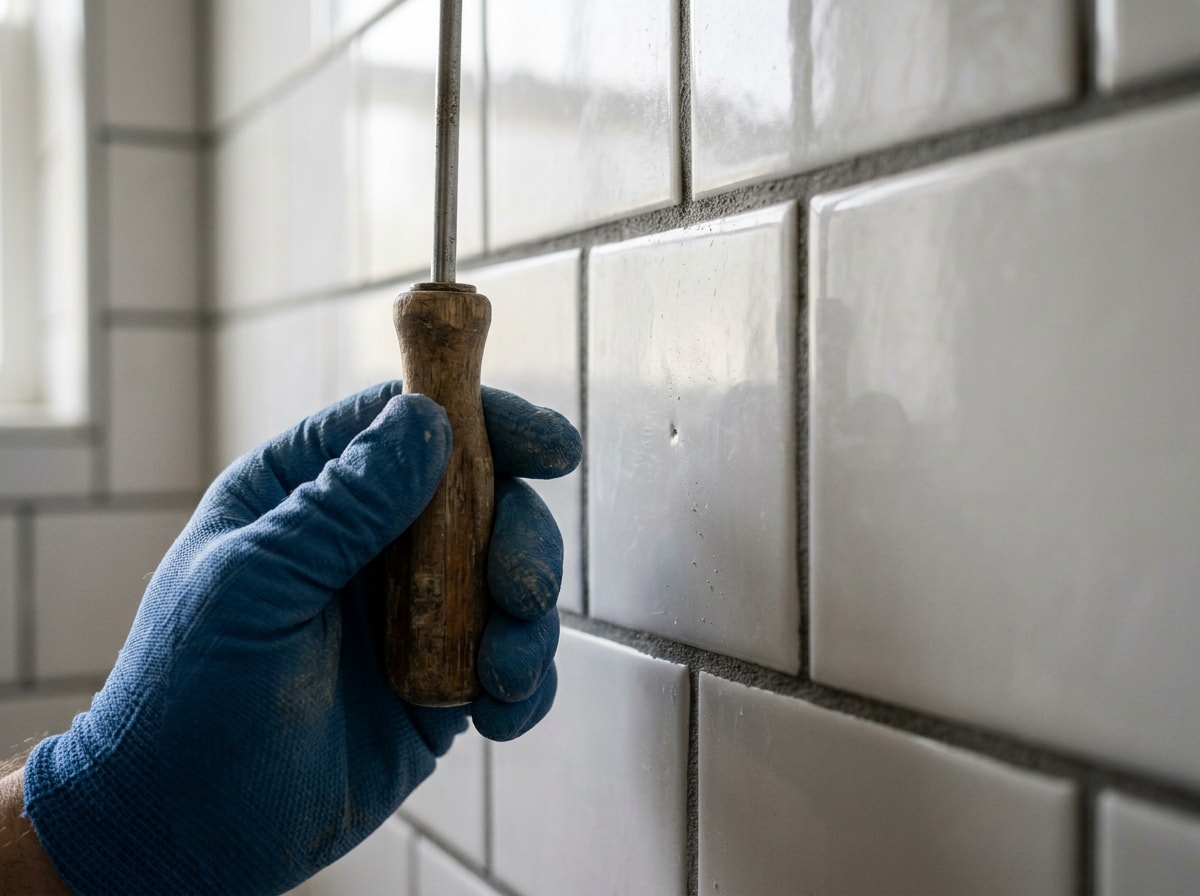
- Tap test: Tap every tile with a hard object. A dull, hollow sound means the tile has debonded from the substrate underneath.
- Flatness check: Hold a straightedge or level across the wall and floor. A gap of more than about 1/4 inch over 10 feet signals an uneven substrate that will telegraph through the new layer.
- Moisture and mold check: Look at grout lines, caulk joints, and the area around the drain for discoloration, soft spots, or a musty smell.
- Crack check: Hairline cracks in tile or grout often mean movement in the substrate, not just cosmetic wear.
- Drain and slope check: Water should run straight to the drain with no pooling. Standing water after a test run means the slope has already failed.
If a shower fails even one of these checks, demo is the safer call, not the overlay.
Step-by-Step: How Tile Over Tile Actually Gets Installed
Once a shower genuinely clears the checks above, the work itself follows a fairly specific sequence.
Tools & Materials
- Demo and prep: utility knife, corner silicone removal tool, shop vacuum, denatured alcohol
- Bonding: bonding primer and modified thinset applied with a notch trowel
- Finishing: grout float and a marine-grade epoxy for sealing the drain assembly
The Process
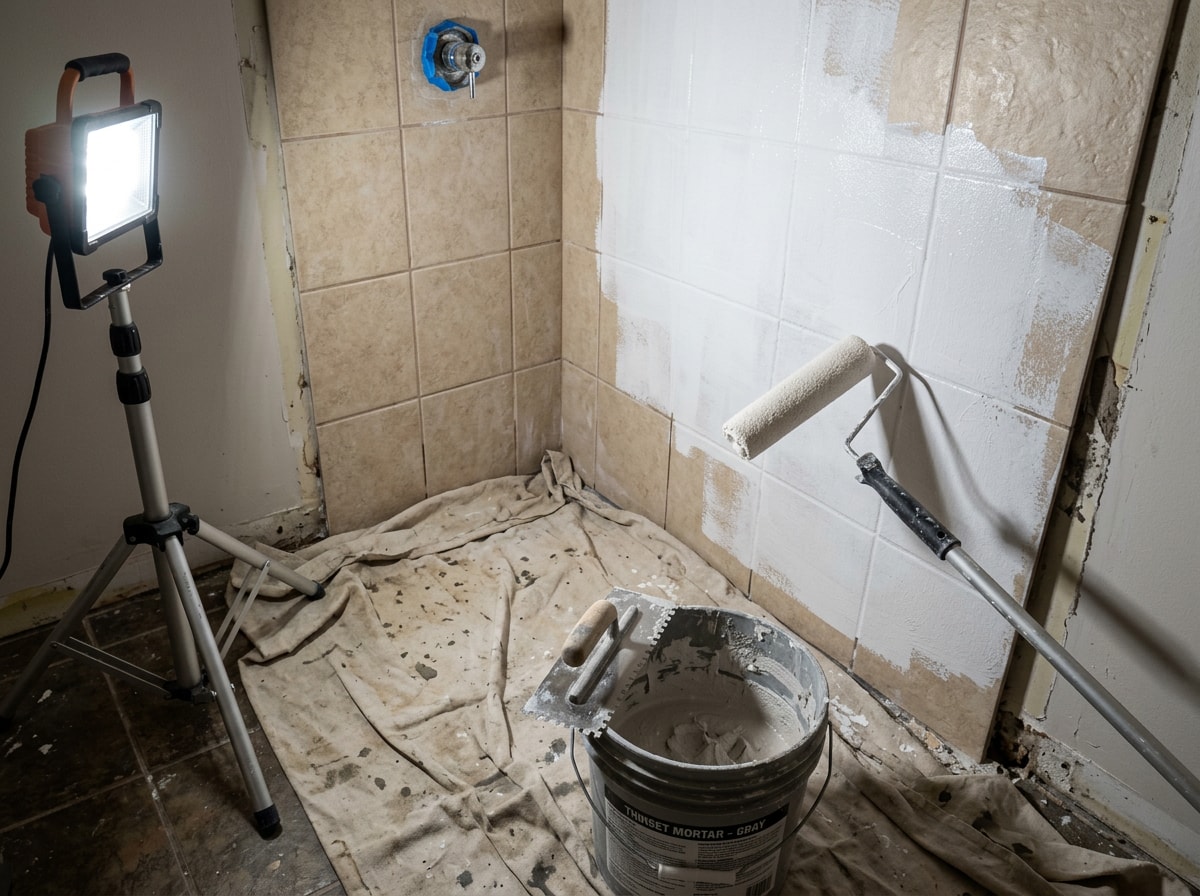
- Strip and clean. Cut and remove old silicone, vacuum the surface thoroughly, then wipe it down twice with denatured alcohol so nothing blocks adhesion. Protect the drain opening before any grinding or liquid work begins.
- Prime the surface. Mix the bonding primer thoroughly, apply two coats, and wait about an hour between coats. The final coat needs to cure overnight before you touch it. A properly scuffed and primed surface is what actually lets the new thinset grip; skipping this step is the most common reason overlays fail early.
- Prep the drain and set tile. Build up and seal the drain assembly, then set tile with modified thinset and even spacing.
This sequence assumes the shower already passed the inspection checklist above. It isn't a substitute for that assessment.
The Hidden Height Problem
Tiling over tile adds real height to the finished surface, usually around 3/8 to 1/2 inch once old tile, new thinset, and new tile stack together. That small rise causes three practical problems:
- Drain mismatch: A shower drain extension is often needed to keep the drain sitting slightly lower than the new surface, so water still drains correctly instead of pooling at the edges.
- Door clearance: A half-inch rise can be enough to make a sliding door drag or a sweep stop sealing against the new threshold.
- Transitions: A transition strip at the curb or adjoining floor smooths out the height change; choosing a thinner tile upfront avoids most of this headache.
If raising the drain means cutting into the plumbing, that crosses from a cosmetic job into regulated work, which is where Frisco's permit rules come into play.
Frisco Permits: What Actually Triggers One
Cosmetic tile replacement in a bathroom, without touching plumbing, electrical, or framing, typically doesn't require a separate permit in most Texas cities, Frisco included. The moment a project modifies the drain flange, raises the shower pan, or involves other plumbing alteration, that's different. A permit is required for any commercial, residential, sign, fence, or other miscellaneous structures, including anything erected, constructed, enlarged, altered, repaired, moved, improved, removed, converted, or demolished , per the City of Frisco's permit page.
Since a tile-over-tile job that needs a drain extension technically alters the plumbing, it's worth a quick call to Frisco's Building Inspections Division before work starts rather than guessing. A five-minute phone call is cheaper than a failed inspection after the tile is already set.
Our Recommendation for Frisco Showers
Yes, you technically can tile over tile in a shower, but you almost always shouldn't, because the risks of hidden moisture, bond failure, and inherited problems are too high. A shower tile inspection, meaning a hollow-tile tap test plus checking flatness, slope, and cracks, is non-negotiable before considering it at all.
Most Frisco shower remodels are better served by a full bathroom remodeling assessment first, especially in older homes where the original waterproofing has had two decades to quietly fail. If you're still deciding between a tub and a walk-in shower while you're at it, our tub-to-shower conversion guide walks through layout options worth considering during the same project.
Our team serving Frisco, TX can walk your shower with you, run the inspection checklist above in person, and tell you honestly whether an overlay is even on the table before you commit to either path. Get a free estimate before you buy a single box of tile.
FAQ
Can You Tile Over Tile on a Shower Floor?
Opinions split here, but not as much as they first appear. Some pros reject a shower floor overlay outright because the pan, slope, and drain flange assembly can't be trusted or corrected through an overlay. Others say it's possible if the existing tile is waterproof, properly sloped, and free of cracks or looseness. Both camps agree on the real deciding factor: drain slope and pan condition, not the tile itself.
Can You Put Peel-and-Stick Tile Over Tile in a Shower?
No. Peel-and-stick tile works best in low-moisture spaces like a laundry room or closet floor. Self-adhesive backing isn't built for constant water exposure, steam, and temperature swings. Save peel-and-stick shortcuts for dry areas, not the wet zone.
Can You Tile Over Backsplash Tile?
Yes, and it's a much lower-risk case than shower tile. You can typically tile over old kitchen backsplash tile, glossy glass or textured ceramic alike, as long as the surface is clean, dry, and stable. Check out our kitchen backsplash installation page if you're weighing the same question for a kitchen project. A kitchen overlay simply doesn't carry the moisture exposure a shower does.
Do You Need to Remove Grout Before Tiling Over Tile?
No, if the existing grout is sound, intact, and free of cracks or mold, it can stay. What matters more is that the overall surface is flat, clean, and properly primed so the new thinset bonds. Loose or crumbling grout should be dug out and repaired first regardless.
How Much Does Tiling Over Tile Cost Compared to Full Demo?
Costs vary by shower size and tile choice, but the gap is often smaller than homeowners expect. Specialty bonding primers, extra labor for surface prep, and potential drain modifications frequently close most of the savings that made the overlay look attractive in the first place.
Is It Bad to Tile Over Tile in a Bathroom?
It depends entirely on location. On a dry bathroom floor outside the shower, a bonded overlay with proper prep is a defensible option. Inside the shower envelope, where water exposure is constant, it's a much higher-risk move that most licensed pros avoid recommending.
If you'd rather see how a full bathroom overhaul compares in scope, our Homepage has an overview of every remodeling service we handle across Frisco and the surrounding Metroplex, including the elevator remodeling work we've done for multi-level homes in Highland Park.