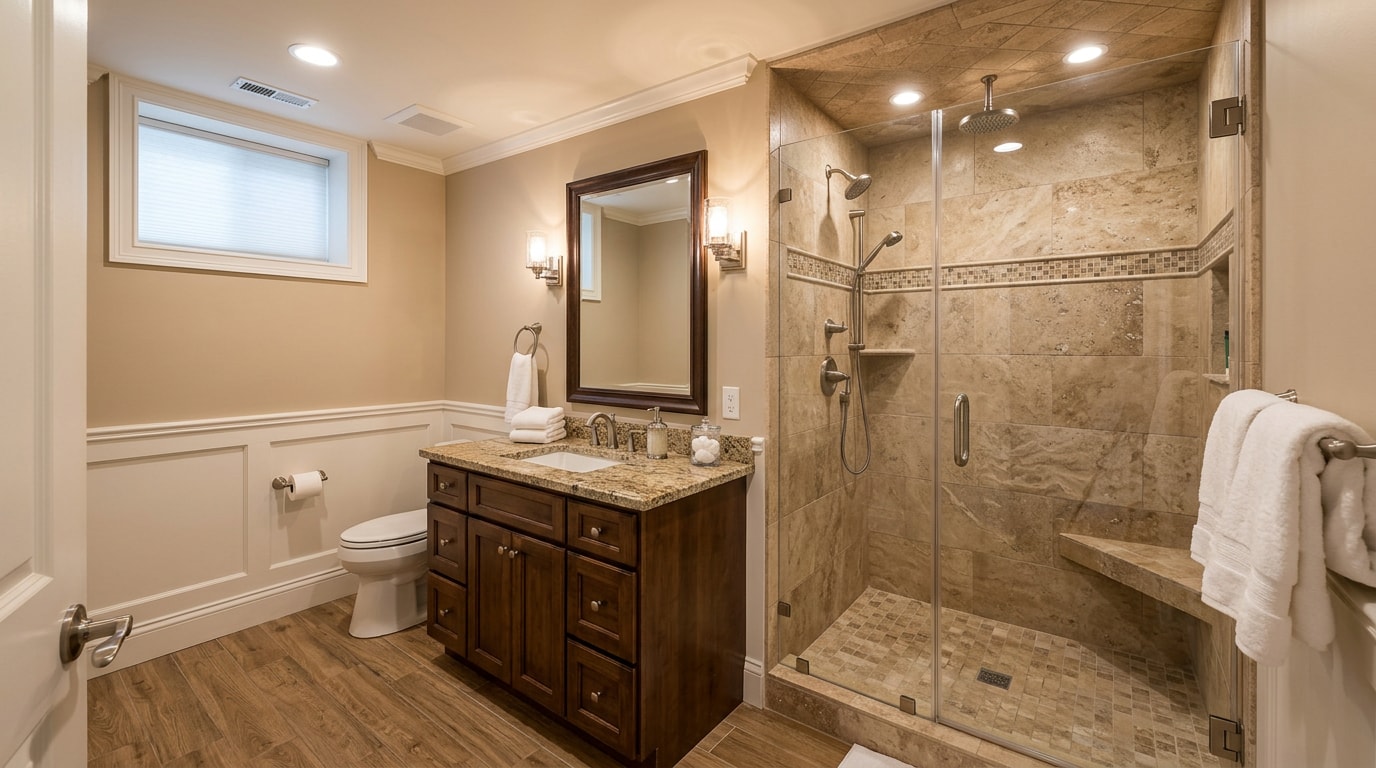
The cost to add a bathroom to a basement in Southlake, TX typically runs $15,000 to $45,000, depending on bathroom type and how far the new fixtures sit from your existing drain line. That's a wide range on purpose. Plumbing location, not square footage, is what actually moves the number.
Before you call a contractor, there's one local wrinkle most national cost guides skip entirely: most homes in Southlake don't have a true basement at all. Here's what that means for your project, and what it actually costs to build one out.
Average Cost to Add a Bathroom to a Basement in Southlake, TX
Most basement bathroom additions in Southlake land between $15,000 and $45,000 once plumbing, framing, fixtures, and finishes are included. Half baths sit at the low end. Full baths with a tub and premium tile push toward the top.
Expect the project to take 2 to 6 weeks from demolition to final inspection. Timeline depends almost entirely on permitting speed and whether the crew has to break concrete to reach the drain line.
| Project Scope | Estimated Cost Range |
|---|---|
| Half bath (toilet + sink) | $9,000 – $18,000 |
| Three-quarter bath (adds shower) | $16,000 – $28,000 |
| Full bath (adds tub) | $25,000 – $45,000 |
Southlake pricing tends to run at the higher end of DFW averages. Labor rates in Tarrant and Denton County have climbed faster than material costs over the past few years, and larger custom homes in Southlake often call for upgraded finishes that push a standard bathroom build toward the premium end of these ranges.
Why Basements Work Differently in Southlake, TX
This is the part most cost calculators get wrong for North Texas. Much of the region sits on expansive clay soil that swells and shrinks with moisture, and the water table in many spots is close enough to the surface to make a dug-out, below-grade basement expensive and risky to build and waterproof. That's a big reason true basements are rare across Texas, including in Southlake.
So when homeowners here search for "basement bathroom" cost, they usually mean one of two things:
- A below-grade basement in an older or custom-built Southlake home, often with engineered walls and active waterproofing already in place.
- A finished lower level or garden-level space in a newer build, which still needs the same below-main-drain plumbing solutions a true basement would.
Either way, the plumbing challenge is identical: the new bathroom sits below your home's main drain line, so gravity alone won't move waste out. That single fact drives most of the cost swing in this article.
Cost by Plumbing Scenario
Plumbing access, not room size, is the single biggest cost driver in a basement bathroom build. Here's how pricing shifts depending on what's already in the floor.
| Scenario | Estimated Cost | Why |
|---|---|---|
| Existing rough-in plumbing | $8,000 – $16,000 | Pipes are already stubbed out; crew connects and finishes |
| No rough-in, gravity drain possible | $14,000 – $24,000 | Concrete must be cut to run new drain lines |
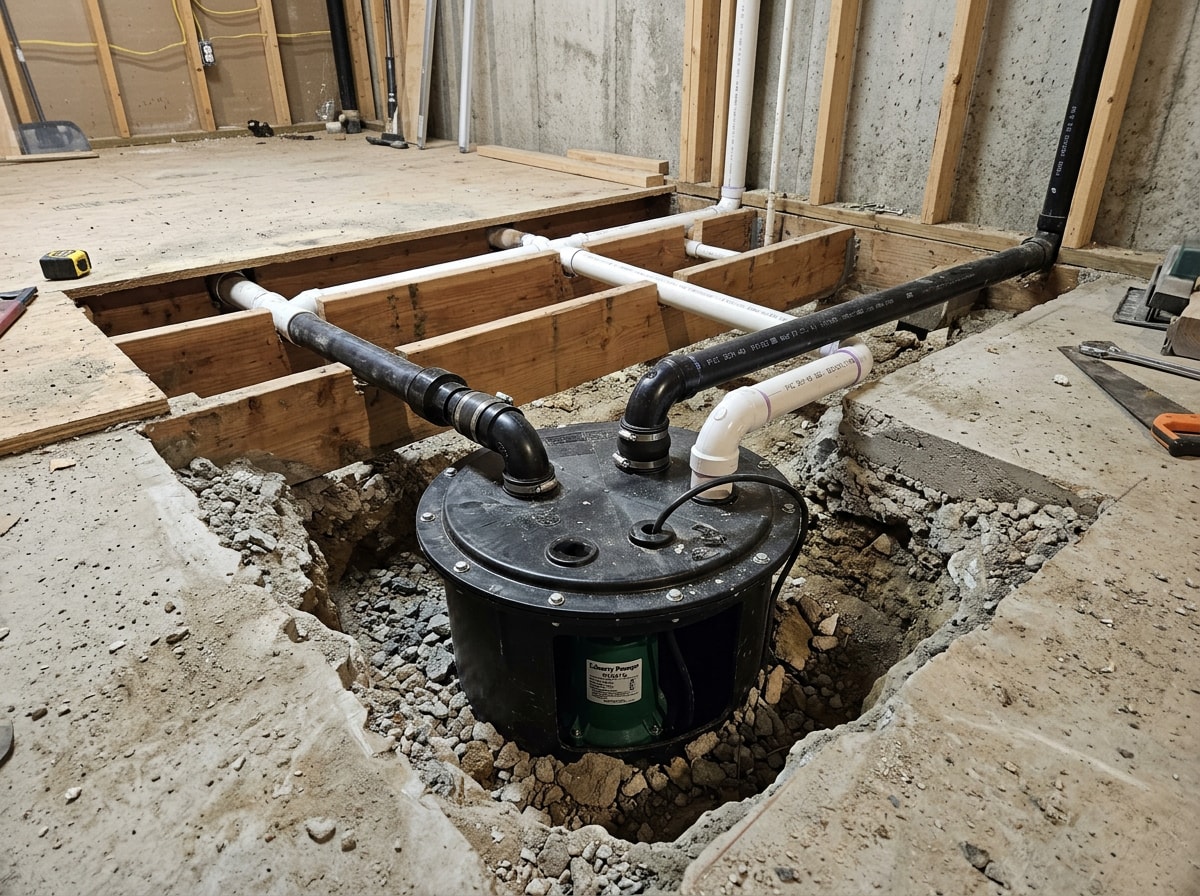
| Below main drain line (ejector pump needed) | $20,000 – $38,000+ | Requires a sealed ejector basin, pump, and backwater protection |
If gravity drainage isn't an option, a sewage ejector pumps waste up to the main line and typically adds $1,200 to $3,500 installed, depending on pump size and basin depth. The upside is placement flexibility. An ejector system lets you put the bathroom almost anywhere in the lower level instead of being locked into a spot near the existing stack.
Materials and Labor Breakdown
Materials
Fixtures make up a meaningful share of the budget. A toilet, vanity, and shower or tub combination typically runs $2,500 to $6,000, and tile plus waterproofing adds another $1,500 to $4,000 on top. A quality vanity with a stone top is worth the upgrade here. It's one of the few finishes buyers notice immediately, and it holds up far better than laminate in a below-grade space where humidity tends to run higher.
Our bathroom vanity installation and bathroom countertop installation teams see this firsthand on basement projects: a sealed stone or quartz top resists the moisture swings a below-grade bathroom deals with better than most budget options.
Labor
Labor usually accounts for 40% to 55% of total project cost. Plumbers and electricians in the DFW area generally charge $75 to $150 per hour, and a general contractor overseeing the build adds roughly 15% to 20% for coordination, scheduling, and permitting.
Basements also need proper ventilation, which is easy to underbudget. A bathroom fan has to be sized for the space, not just bolted on as an afterthought, and national design guidance from the National Kitchen & Bath Association calls for a minimum of 60 CFM of bath ventilation, more if the room has multiple fixtures.
Cost by Bathroom Type
Bathroom type is the second-biggest cost driver after plumbing access, and the gap between types matters a lot once you're pricing out a specific layout.
- Half bath (toilet and sink only): The most cost-effective option since it needs the least plumbing infrastructure. Works well as a guest convenience bath near a home gym or media room.
- Three-quarter bath (adds a shower): A solid middle ground for guest suites or teen retreats. Skips the space and plumbing load of a full tub while still functioning as a real bathroom.
- Full bath (adds a tub): The most expensive option, but it's the right call if the basement is being set up as a true guest suite or income-producing space.
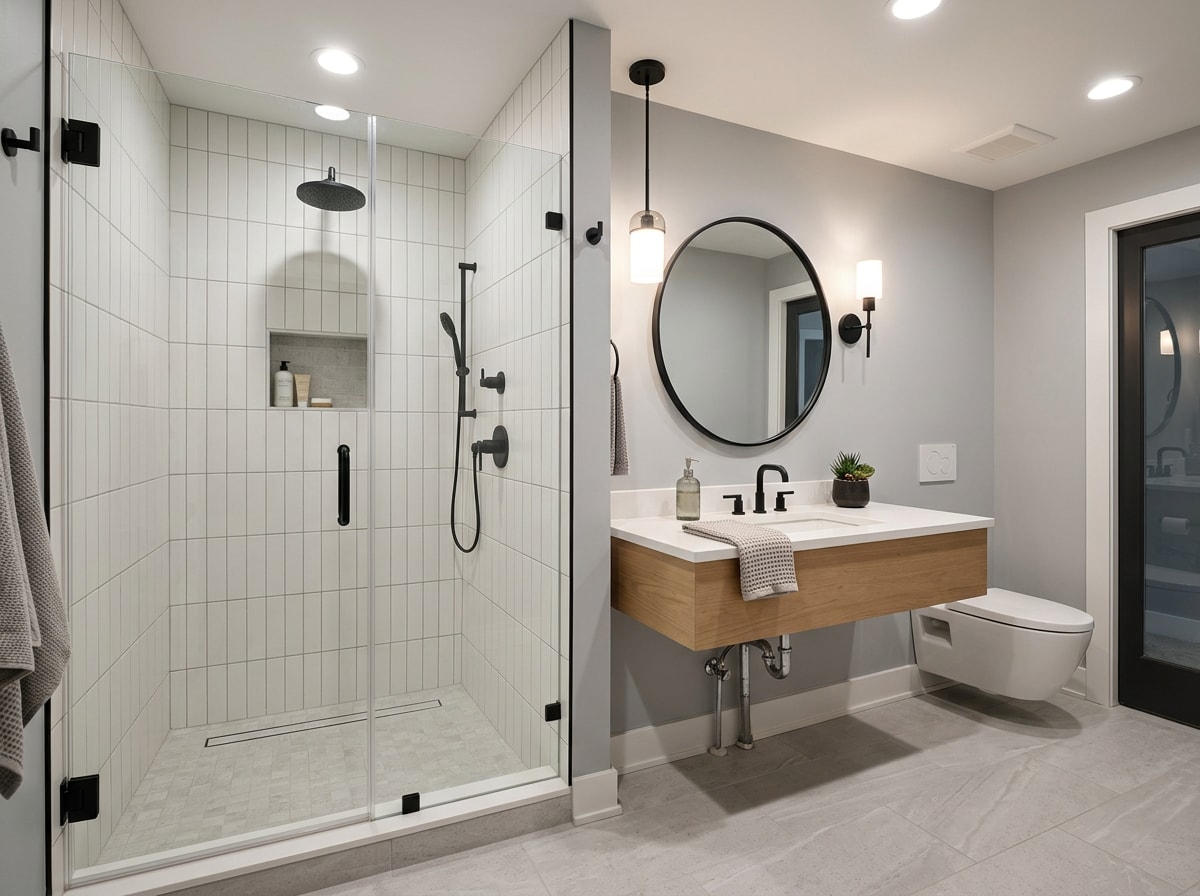
Converting unfinished basement space into a bathroom is almost always cheaper than building a new addition onto the house, since you skip foundation work and exterior walls entirely. Explore our bathroom remodeling services to compare layouts for your specific space.
Permits and Southlake Building Code Requirements
Before you finalize a budget, build in permit costs. A basement bathroom addition touches plumbing, electrical, and often framing, and the City of Southlake's own guidance is direct about this. Permits are required when building, remodeling, or enlarging a building, and remodels that involve walls, electrical, or plumbing fall squarely into that category.
Permit fees vary by project scope and valuation, so confirm the current fee schedule with Southlake Building Inspections before you lock in a budget. Also confirm your contractor pulls permits under their own license rather than yours.
If your bathroom sits below the next upstream manhole on the public sewer, your plumber also needs to account for backwater protection. The International Residential Code's plumbing provisions cover both backwater valves and sewage ejector requirements for exactly this situation, and your local building department will tell you which edition it currently enforces.
For contractors familiar with Southlake's permitting process and soil conditions, visit our Southlake service area page for more detail on how we approach local projects.
Benefits and ROI of Adding a Basement Bathroom
A finished lower level with its own bathroom becomes genuinely usable space rather than storage with a sump pump in the corner. That matters for resale, but it matters even more for day-to-day livability if you're using the space as a guest suite, home office, or teen retreat.
On resale value specifically, be cautious about any blog claiming a precise ROI percentage for basement bathroom additions. Numbers vary significantly by project scope, market, and year. The most reliable benchmark is the national Cost vs. Value Report, which tracks regional cost and resale data for bathroom projects annually and is the source real estate professionals and appraisers reference most often.
What we see consistently on Southlake projects: a finished basement with a bathroom tends to widen your buyer pool more than it changes a single appraisal line item, since it adds usable square footage that shows up in listing descriptions.
DIY vs. Hiring a Licensed Contractor
Most basement bathroom installs involve enough plumbing, electrical, and waterproofing work that hiring licensed professionals is worth the added cost. We've seen homeowners try to save money by DIYing the tile and finish work after hiring out the plumbing, which works fine. The mistakes that get expensive are the ones made before drywall goes up: wrong drain slope, missed backwater protection, or ventilation that's undersized for the room.
If you're weighing a full DIY approach against hiring out, our guide to DIY bathroom remodel costs in Southlake breaks down where DIY actually saves money and where it doesn't.
Ready to see real numbers for your space? Get a free estimate and we'll walk your basement, check your drain line depth, and give you a scope-specific quote instead of a generic range.
FAQ
How much does it cost to add a small bathroom to a basement?
A half bath in a Southlake basement typically costs $9,000 to $18,000, including a toilet, sink, and basic finishes. Costs rise if plumbing needs extending or an ejector pump is required.
Is it more expensive to add a bathroom in a basement than upstairs?
Yes. Basement bathrooms cost more than main-floor bathrooms because of ejector pumps, concrete cutting, and added drainage work. Expect to pay roughly 20% to 40% more than a comparable above-ground bathroom remodel.
Can I remodel a bathroom for $5,000?
A $5,000 budget covers a cosmetic refresh, such as new fixtures, paint, and flooring, for an existing bathroom. It won't cover a new basement bathroom build, since that requires plumbing and electrical work that quickly exceeds that budget.
Does a basement bathroom in Southlake need a sewage ejector pump?
Only if the new fixtures sit below your home's main drain line, which is common in below-grade spaces. If gravity drainage isn't possible, a sewage ejector system pumps waste up to the main line and typically adds $1,200 to $3,500 to the project.
Do I need a permit to add a bathroom to my basement in Southlake?
Yes. The City of Southlake requires a permit for remodels involving walls, electrical, or plumbing, which covers nearly every basement bathroom addition. Confirm fees and inspection steps with Southlake Building Inspections before work starts.
How long does it take to add a bathroom to a basement?
Most projects take 2 to 6 weeks from demolition to final inspection. Projects that require breaking concrete for new drain lines or installing an ejector system run toward the longer end of that range.
What's the cheapest way to add a bathroom to a basement?
Building near existing rough-in plumbing is the cheapest path, since the drain and vent lines are already in place. Choosing a half bath over a full bath also cuts cost significantly by eliminating tub or shower plumbing.
Want a number specific to your floor plan instead of a range? Contact Solid Stone & Granite for a free, on-site estimate, or start on our homepage to see our full range of kitchen and bathroom remodeling work across the DFW metro. You can also compare costs with a neighboring market in our Flower Mound bathroom addition cost guide.